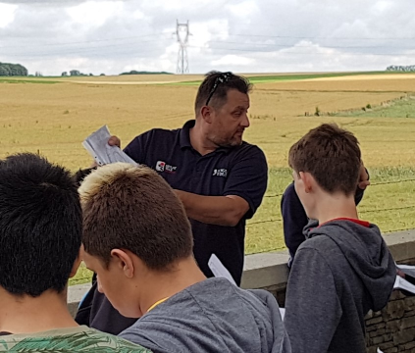
Richard Burgess is an experienced battlefield guide, educator and social historian with many years’ experience designing and leading educational tours across the United Kingdom and Europe. He is an Accredited Member of the International Guild of Battlefield Guides (Guide No. 83) and is also accredited and licensed to guide groups at the Sachsenhausen Concentration Camp Memorial in Germany, where he provides historically informed and sensitive interpretation of the site, its victims and its place within the wider history of Nazi persecution and the Holocaust.
His principal areas of interest include the First and Second World Wars, the Holocaust, the Cold War, genocide studies and the relationship between faith, conflict and the human experience. His wider historical work encompasses Victorian crime and punishment, criminology and the development of criminal investigation.
What particularly distinguishes Richard’s approach to battlefield guiding is his professional background as a former Nationally Accredited Intelligence Officer and Detective Sergeant. Drawing upon those investigative skills, together with his work as an educator and social historian, he approaches history through evidence: examining sources, questioning assumptions, testing accepted narratives and encouraging those he guides to consider not simply what happened, but how we know.
Over the years, Richard has led hundreds of educational visits for schools, colleges, churches and adult groups. Qualified in Christian Studies, he also continues to develop his professional practice in education and training, with particular emphasis upon inclusion, accessibility and meaningful engagement.
Richard founded the Essex Police Military History Club and was instrumental in securing a permanent memorial on the Somme commemorating Essex Police personnel who lost their lives during the First World War. Unveiled during the centenary commemorations in 2016, the memorial remains a lasting tribute to their service and sacrifice.
For Richard, battlefield guiding is about far more than dates, places and military events. At its heart are people: the decisions they made, the circumstances in which they made them, the consequences that followed and the lives forever changed by conflict.
His aim is to bring people into meaningful contact with the past — to examine the evidence, walk the ground and understand the human stories behind the history — encouraging those he guides to question, understand, reflect and remember.